
Lessons from the grapevine
Cutting back to grow stronger


I spent most of last year renovating an old farmhouse1 in the country with my dad. It’s still a work in progress, but in January, it was time to move in. The whole point of moving to the country was to have a space to write and eventually grow a small homestead with chickens, grapes, and maybe some bees. In reality, I’ve been buried in deadlines and playing catch-up in the never-ending freelance cycle. Any space for creative thinking seemed to vanish.
I’m lucky to get assignments from editors, and technically, I’ve been writing all the time. I wrote 43 articles so far in 2025, plus fact-checking and copywriting. Despite my output, nothing really fuelled a creative spark. Even the assignments I was actually interested in writing — a book review, a reported feature on Gaelic in Cape Breton — were churned out in a haze on the day they were due. (Much like how I approached my university papers… some things never change.)
Meanwhile, I was adjusting to quirky features of rural-living. My friend lives just 12 kilometres down the road, and I visit her a couple of times each week. I didn’t realize my little jaunts would move my gas meter dangerously low — and we live in a gas desert. If I wasn’t careful, I would probably run out of gas.
It was also a pretty cold winter, as far as I could tell, and I learned that my driveway would need to be plowed or else it would melt and then freeze over into a sheet of ice, leaving me and my car stuck at the bottom of the hill. I lugged up my groceries by hand on more than one occasion.
So, after five years of freelancing, pitching, fact-checking, and always keeping a wary eye on my inbox, I hit a kind of slow, quiet wall. Not a dramatic burnout. More like creative erosion. I was running on empty, so to speak, and now that the sun was shining well into the 7 o’clock supper hour, it was time to step back and reevaluate.
I originally launched this newsletter in 2023 to offer a behind-the-scenes look at my freelance writing, to provide more context on a subject or explain how a pitch landed. I only put out three newsletters in 2024, well below my intended goal. I didn’t mean to disappear from this space — but the absolute last thing I wanted to write about was my day job.
Something wasn’t quite clicking. I had moved to the country. I had renovated the 200-year-old farmhouse. And just outside my front door, a vineyard. My family had planted the vines years ago, and I often found myself staring at them during tedious phone calls, wondering when I'd finally give them the care they deserved.
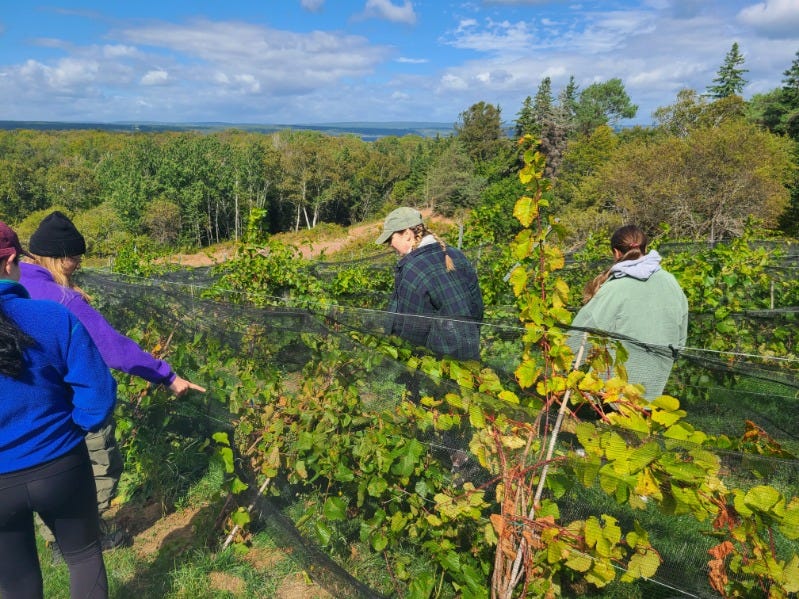
One acre of grapes, tangled into a horrible mess, with weeds growing up between them and 15 foot vines stretching wildly down the hill underneath overgrown grass. They were neglected vines, the name for unpruned, untended, and sprawling plants. Without the proper care, they end up unruly, tangled together, and difficult to manage. It’s hard on the health of the plant, too. Now, I’m learning how to prune the vines.
At first I felt bad cutting off so much. But pruning neglected vines is crucial for their health and productivity. Excess wood is chopped off so energy can go back into the root and get stronger. It encourages new growth and ultimately leads to better quality grapes. I’m supposed to train the vines so things don’t get unwieldy.
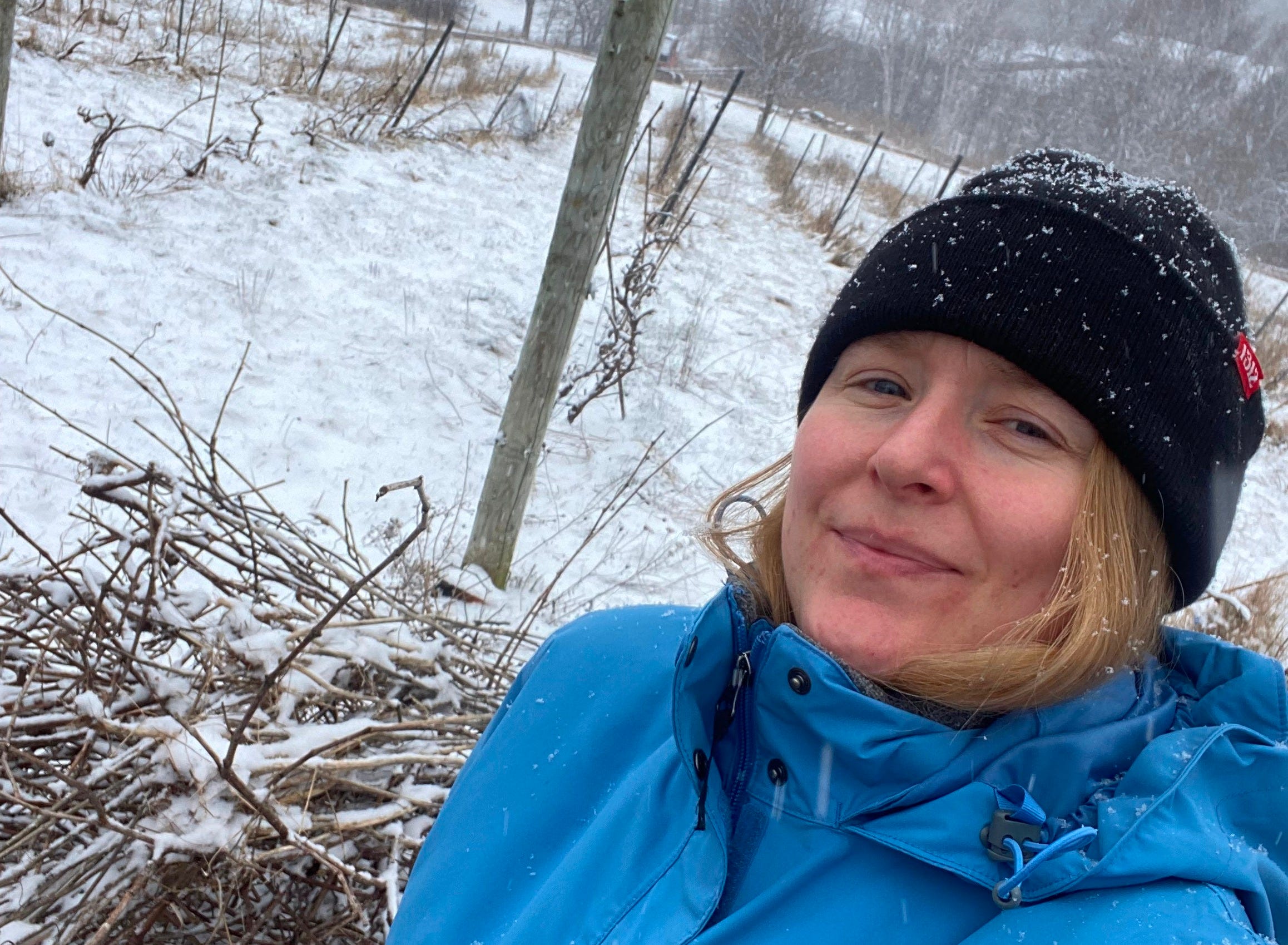
So I dig out the snippers and go to work. I grab the wild vines and wrestle them out of the grass. I sit on the cold ground and clear away long hay and weeds to see the base of the plant. I cut off a lot of growth, leaving it basically bare, but refreshed. They deserve a fresh start, a chance to grow back stronger — and in the right direction this time.
After a couple of hours, I go back inside the warm farmhouse. My cheeks are red, twigs are literally sticking out of my hair, and dozens of teethy burrs are hooked into my socks. Tending the vines is not easy — my hands are scratched up and my legs are sore from climbing up and down the hill. But now I get the benefit of looking out my window and seeing progress.
All the while, I’ve been remembering what it feels like to work with my hands, slowly investing my time and labour into a thing that actually takes a while to bear fruit. It’s a stark contrast to the rush of deadlines and hammering away at a keyboard that I usually do. I’ve been trying to consciously slow down, focus on the land, and dive into physical work without a strict deadline. And in the midst of all that, I’ve started to find a sense of balance and clarity I hadn’t felt while running on empty.
Of course, I’m far from the first person to feel creatively bankrupt and overworked. Maybe you feel like you’ve neglected a passion project, or maybe an idea that once lit a spark in you is slowly dying. If that’s the case, or you’ve found any of this helpful, consider subscribing for free by clicking the button just below. Future essays on battling creative erosion will land in your inbox whenever I hit publish.
And by the way, I’m not an expert on life, farming, or writing. I won’t pretend to know exactly where this newsletter is headed, either. But I’m here now, and I think it’s time to share more of the process, even if it’s unpolished. See you around?
For further reading: my essay for The Walrus about fixing up the farmhouse.
Glad you’re back, Emily! Great read! I see Charlotte in the pic. 😀
Great read Emily! I can relate to the feeling of burn out recently, nothing like the feeling of spring and being in nature to help combat it!